Deutsch
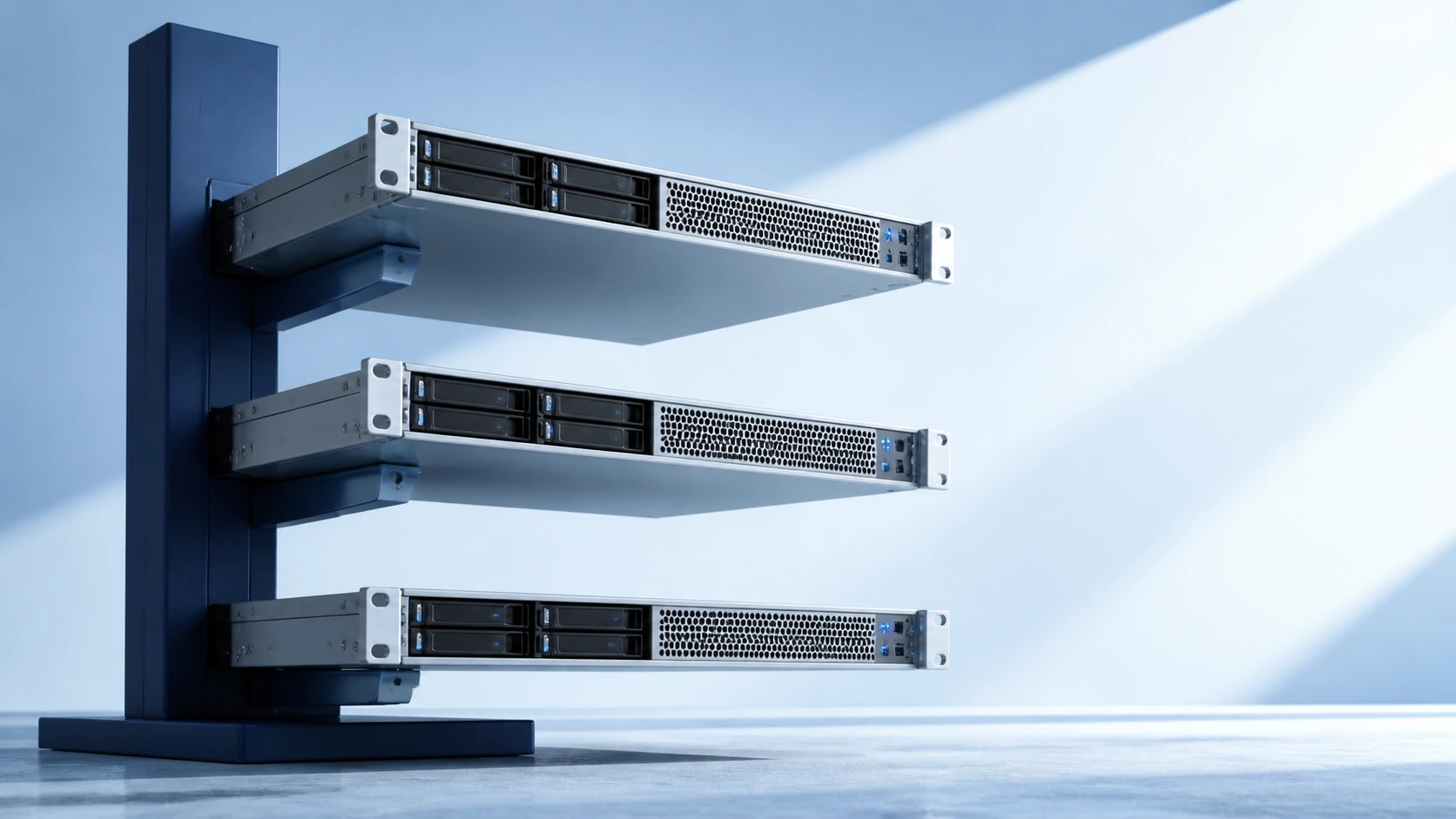
An offshore streaming server is an origin server located in a country different from the operator's home market. The useful reason to consider one is operational: place an ingest, packaging, or delivery origin near the audience, meet a documented data-location requirement, or use infrastructure available in a specific region.
Server location does not remove copyright, content-licensing, platform-policy, privacy, data-protection, tax, sanctions, or other legal obligations that may apply. A viable design starts with distribution rights and provider policy, then tests the network and workload instead of treating a jurisdiction as a safe haven.
Streaming software and protocol references were last checked on 11 August 2026.
What changes when the origin is international?
The word “offshore” does not describe a performance tier or a legal exemption. It describes placement. Compare candidate regions using evidence that can be recorded and retested.
| Decision factor | Evidence to collect | Failure signal |
|---|---|---|
| Viewer path | Latency, loss, jitter, and throughput from audience regions | Rebuffering or unstable ingest |
| Provider network | Port capacity, transfer terms, peering, and maintenance notices | Peak traffic exceeds a documented limit |
| Data location | Written residency and processing requirements | Required data crosses an unapproved boundary |
| Provider policy | Acceptable-use, content, complaint, and suspension terms | The intended service conflicts with policy |
| Support | Contact method, hours, escalation, and incident response | No usable path during a live event |
| Applicable rules | Advice for operator, audience, and hosting locations | Rights or obligations remain unresolved |
Do not rank countries as “safer” in the abstract. A region is suitable only when its measured network path, provider contract, data handling, content rights, and operating model fit the specific service.
Define the streaming architecture before sizing a server
Three architectures that look similar from a viewer's perspective can put very different loads on the origin.
Origin and package only
The server accepts an ingest, creates or serves stream manifests and segments, and lets a CDN deliver most viewer traffic. Origin transfer depends on cache behavior, segment settings, misses, purges, and failover—not only total viewer count.
Transcode at the origin
The server decodes an incoming stream and produces multiple renditions. CPU or GPU demand depends on codec, resolution, frame rate, quality settings, and the number of simultaneous outputs. Choose hardware from a repeatable encode benchmark using the intended media, not from a generic viewer tier.
Deliver directly from the origin
Each viewer connection consumes origin network capacity. The first planning calculation is selected rendition bitrate multiplied by concurrent direct viewers. Port speed, protocol overhead, packet loss, retransmission, operating headroom, and provider transfer policy must then be validated separately.
Select software by protocol and operating requirement
Current official project documentation describes several possible building blocks:
- MediaMTX documents publishing and reading through protocols including SRT, WebRTC, RTSP, RTMP, and HLS, plus conversion between supported protocols.
- SRS documents RTMP, WebRTC, HLS, HTTP-FLV, SRT, and MPEG-DASH workflows.
- Ant Media Server documents community and commercial editions with different feature, scaling, and support boundaries.
- HTTP Live Streaming is documented by Apple as an HTTP-based delivery technology for live and on-demand media.
Protocol support does not prove that a particular deployment meets its latency, browser, scale, security, or support requirement. Build a test matrix for the exact software edition, client devices, codecs, ingest path, output path, and failure modes.
Size from bitrate, encoding, storage, and offload
Record these inputs before selecting compute or network capacity:
- List every ingest and its codec, resolution, frame rate, and peak bitrate.
- List the output renditions and whether the origin copies, packages, or transcodes each one.
- Benchmark encoder CPU or GPU use with representative content and the intended quality settings.
- Estimate peak concurrent viewers by selected rendition and delivery path.
- Measure the CDN offload ratio during normal, cold-cache, purge, and recovery states.
- Calculate recording storage from bitrate, duration, retention, and replication requirements.
- Add explicit operating headroom, then load-test the full path and record pass/fail thresholds.
Worked bandwidth example
Assume one selected rendition is 5 Mbit/s and 300 concurrent viewers receive it directly from the origin:
5 Mbit/s × 300 viewers = 1,500 Mbit/s of application payload at that moment.
If a measured CDN offload ratio is 96 percent for the same traffic, the steady-state origin share is equivalent to 12 direct viewers:
300 viewers × 4% origin share × 5 Mbit/s = 60 Mbit/s.
This is a planning calculation, not a server-capacity promise. A cold cache, purge, CDN bypass, additional renditions, ingest traffic, protocol overhead, or recovery event can increase origin demand. Test those states against the provider's documented port and transfer limits.
Recording storage calculation
For one 5 Mbit/s stream recorded continuously, the payload estimate is:
5,000,000 bits/s ÷ 8 × 86,400 s ≈ 54 GB per day.
Container overhead, additional audio or video tracks, indexes, replicas, temporary files, and filesystem reserve are separate. Measure actual output and define deletion and recovery procedures before relying on the estimate.
Build a complete cost worksheet
Do not compare servers using an unsourced monthly range. Request a dated provider quote and record every billing unit that can change the total.
| Cost item | Unit to verify | Evidence |
|---|---|---|
| Compute | Server or instance per billing period | Dated plan or quote |
| Encoder | CPU allocation, GPU time, or accelerator | Benchmark and quote |
| Storage | Provisioned and consumed capacity | Retention calculation |
| Origin transfer | Commit, included transfer, or metered use | Provider terms |
| CDN delivery | Regional delivered data and requests | CDN quote and traffic model |
| Software | Edition, licence, and support | Vendor terms |
| Recovery | Independent copies and recovery environment | Recovery design |
| Operations | Monitoring, on-call time, and incident work | Internal estimate |
Also record currency, taxes, setup charges, minimum term, cancellation conditions, excess-use rules, and the date checked. Viewer count alone cannot produce a reliable monthly cost because bitrate, watch time, offload, region mix, and failure behavior all matter.